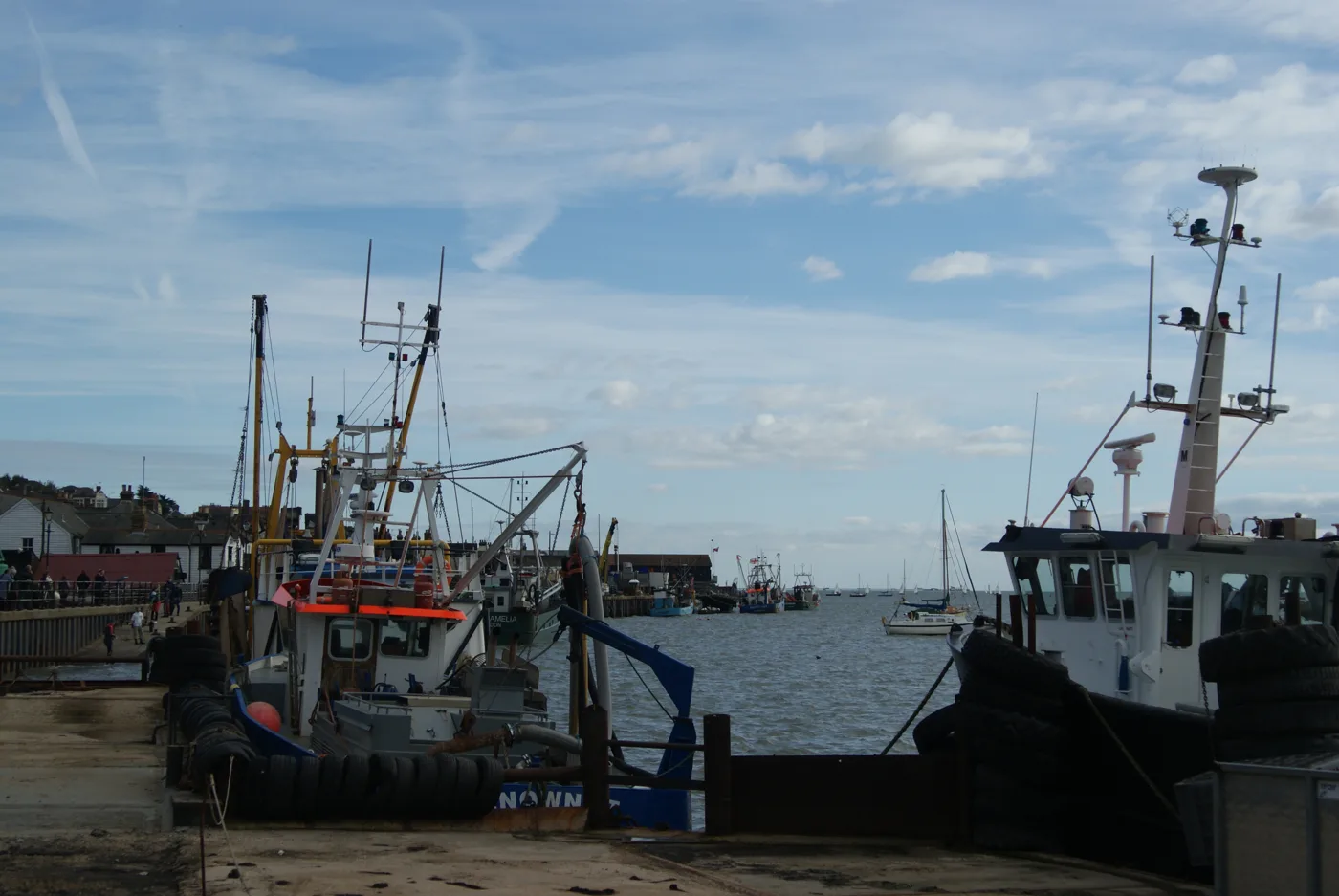

Cabinet approved the £21.8m Leigh Port contract as a direct award, not a competition, and the Levelling Up grant runs out in March 2028, before the work ends.
The rebuild of Leigh Port has its builder. Southend-on-Sea City Council’s Cabinet has approved the award of the main works contract for the £21.8 million scheme, and the council announced it publicly nine days later (Southend-on-Sea City Council).
The council’s news release does not name the contractor. Its own Cabinet report does, and it also sets out two things the release leaves out: the contract is a direct award rather than a competition, and the government grant paying for two thirds of it has a spending deadline three months before the work is due to finish (Cabinet report, 7 September 2026).
Construction starts in October and is due to be complete by June 2028.
Where the money comes from
The total approved budget is £21.801 million. The Cabinet report splits it like this:
- £14.901 million of grant funding through the government’s Levelling Up Fund, a figure that itself includes £880,000 of match funding
- £6.9 million from the council’s own approved capital investment programme
Of that, £2.8 million had already been spent by the time the report went to Cabinet. The construction contract itself is forecast to have a target cost of about £15.6 million, though the report is careful to say the final figure “will be established following completion of the contractor’s pricing process and may vary from the current estimate”.
A further £3 million is set aside for risk and contingency. The report explains why that is high: the works are in “a marine and inter-tidal environment, where ground conditions, reclaimed land, access constraints and regulatory requirements may not be fully quantifiable until works are on site”.
Why there was no competition
Cabinet resolved to approve “the direct award of a new contract to a Principal Contractor by way of call-off via the SCAPE Civil Engineering Gen3 Framework to the sole provider on the SCAPE framework” (draft minutes, item 29). In place of a tender, the report says a desktop evaluation will be carried out “to ensure that Southend secures the best value from the sole provider”.
The report names the incumbent. Balfour Beatty is the current Principal Contractor, and has already done the value engineering on the design and planned the early works. Keeping the same firm, the report argues, “provides better value for money by significantly reducing potential risk and maintaining accountability, given its detailed knowledge of the project and the complexity of delivering major works in an inter-tidal landscape”.
The report sets out what it considered instead, and what it thought of it:
- Do nothing. This “would prevent the redevelopment of Leigh Port and potentially trigger MHCLG requesting the refund of the LUF grant”, while the quay carried on deteriorating.
- Issue a separate bespoke tender. Appointing someone new now “would duplicate effort, require revalidation of existing work, and introduce delays and significant additional costs”.
The council says the route is lawful and compliant with the Public Contract Regulations 2015, and that using a framework “mitigates the risk of procurement challenge”. Because the contract is worth more than the council’s £500,000 key decision threshold, Cabinet had to approve it before it could be signed.
The deadline nobody mentions in the press release
The project runs to June 2028. The grant does not. The report states plainly that the remaining Levelling Up money must be spent before 31 March 2028, “as per the grant criteria”.
That leaves roughly three months of construction at the end that the Levelling Up Fund will not be paying for, and it explains the shape of the spending profile above: £8.7 million this financial year and £8.5 million next, then only £2.08 million in 2028/29.
It also raises the stake on delay. The report lists programme slippage as a key risk in its own right, warning that any slippage “could affect enabling works, funding drawdown and potentially result in increased cost”.
What is actually being built
The contractor takes on piling, dredging, temporary works, general civil engineering, unexploded ordnance surveys, traffic management and logistics, and the Principal Contractor duties under the Construction (Design and Management) Regulations 2015.
The contract form is NEC Option C, a target cost arrangement with a pain and gain mechanism, meaning the council and the contractor share both overruns and savings against the target.
Planning permission was granted on 22 July 2026. The council’s £6.9 million share went to its Investment Board on 4 August.
Why it cost more than it was meant to
The report is candid about the last two years. Costs “have been made fundamentally more difficult due to statutory bodies such as Anglian Water and gaining permissions from the likes of Natural England to protect the natural habitats”. On top of that came “significant construction inflation”, which forced a value engineering exercise to bring the build cost back down.
Two other risks are named:
- Regulatory approvals. Delays or refusals from Natural England or the Marine Management Organisation “could impact key milestones, therefore adding additional cost”. Planning permission is granted and no objections have been raised on this point so far.
- Leaseholder objections, which “could disrupt site access and compound setup”. The council says it is holding regular meetings with leaseholders about site operations and parking during construction.
The environmental strings
Leigh Port sits on protected estuary habitat, and the conditions reflect it. The report says the effects on over-wintering birds and the sea grass were discussed with Natural England, and that Biodiversity Net Gain “will be monitored over the next thirty years through the conservation covenant required under the Environment Act 2021”.
Thirty years of monitoring is a long tail for a two-year build, and it is the sort of obligation that outlives every councillor who voted for it.
What it means for you
- If you use Bell Wharf or the High Street in Old Leigh, expect construction traffic, changed parking and restricted site access from October 2026 to June 2028.
- The cockle and fishing businesses are the point of the scheme. The council’s case is that the industry “relies on safe and reliable quay infrastructure to operate”, and that doing nothing would “jeopardise the long-term viability of the cockle industry in old Leigh”.
- If you want to follow the money, the figure to watch is not the £21.801 million headline but the target cost, currently about £15.6 million and not yet fixed, and how much of the £3 million contingency gets used. Those decisions have been delegated to officers.
- Councillor Kevin Robinson, Cabinet Member for Planning, Property and Governance, said the investment “will help secure the future of the fishing and cockling industry, support local jobs and businesses, and protect a valued historic asset”.
Southend is also spending Levelling Up money elsewhere: the council’s latest capital monitoring puts the whole Levelling Up programme at £10.705 million for this year, of which £1.813 million had been spent by 31 July. For what else is changing on the ground, see our roadworks and travel page.
Sources
- Cabinet report: Leigh Port Development Main Works Contract, 7 September 2026 (council PDF)
- Cabinet agenda and draft minutes, 7 September 2026, item 29
- Southend-on-Sea City Council: Cabinet approves major investment in historic Leigh Port, 16 September 2026
- Appendix 2, Capital Investment Programme Performance 2026/27, Period 4 (council PDF)
Have your say