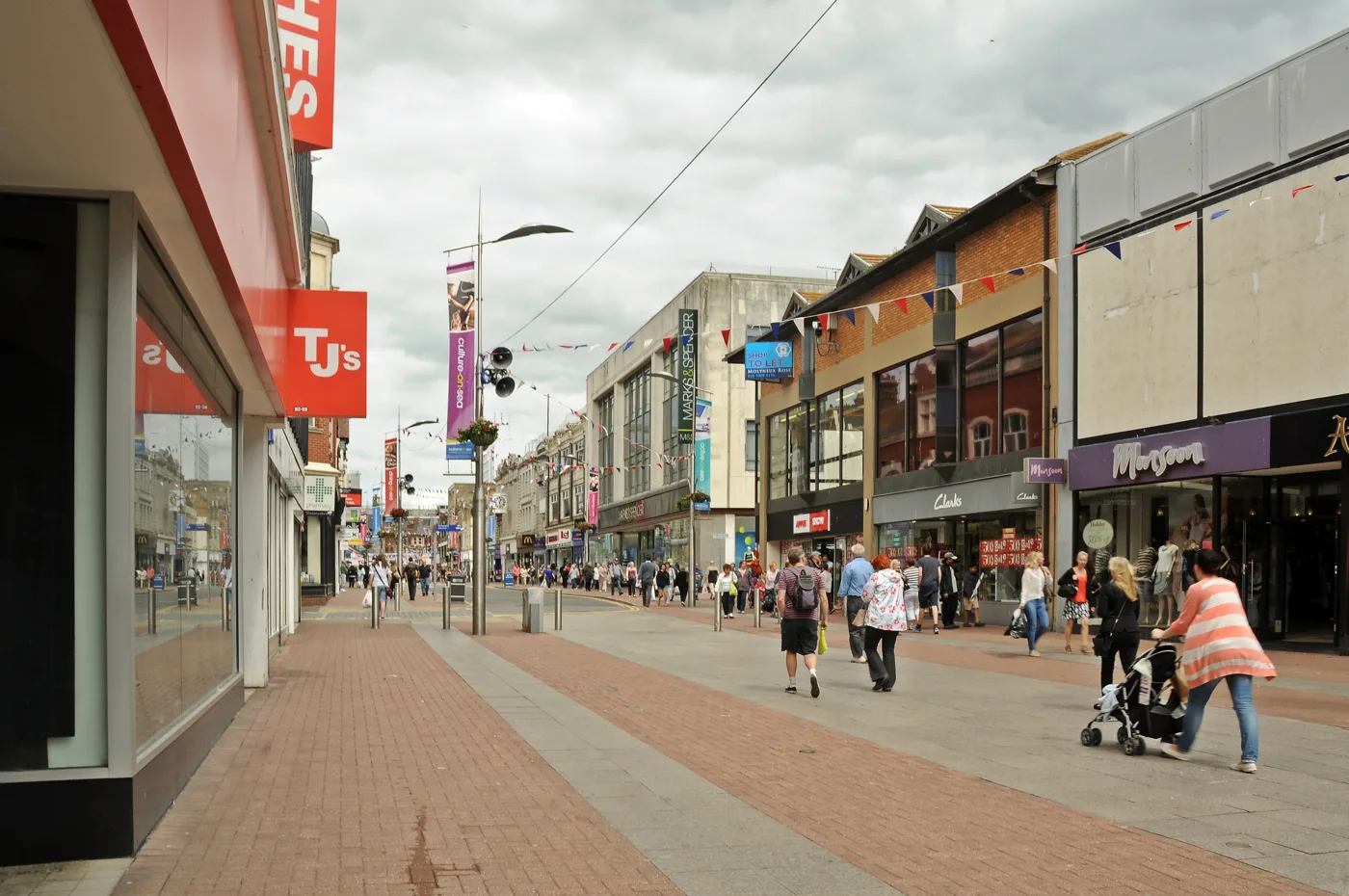

The council's report says city status would fall away and could never be won back. The fix is Charter Trustees, paid for through council tax bills.
Southend became a city on 26 January 2022, by Letters Patent from Queen Elizabeth II. The council has now been told, in writing, what happens if it does nothing to protect that: “The City status and other Charters awarded to the former Borough of Southend will fall away and cannot be regained.”
Full council was asked on Monday 14 September to support setting up Charter Trustees, a body whose only job would be to hold the city status, the ceremonial mayoralty and the civic regalia (Council agenda, item 11). Minutes have not yet been published, so the outcome is not yet on the record.
The reasoning is set out in a report by Susan Zeiss, the council’s Director of Legal Services and Monitoring Officer, which Cabinet agreed in July (Cabinet report, 13 July 2026).
Why it is at risk at all
City status was granted to Southend-on-Sea City Council’s whole municipal area. It belongs to the council, not to the place in the abstract. Abolish the council and, unless something has been created to hold the Letters Patent, there is no longer a body they were granted to.
That was the point of the report. The Secretary of State had issued a “minded to” decision merging Southend with Castle Point and Rochford into a new South East Essex Council from 1 April 2028.
That decision was withdrawn on 7 September, a week before the item reached full council, as we reported when the merger was called off. The papers councillors were given on Monday still describe the 2028 abolition as scheduled. They were not rewritten.
Why the obvious option was ruled out
There are two legal routes. The council rejected the first.
A community governance review could create a parish council covering the city, and a parish can hold city status. But the parish has to match the footprint in the Letters Patent exactly, which means one parish for the whole city. Southend already has a parish: Leigh Town Council. It would have to be abolished.
The timing also does not work. Ministry guidance means the final decision would need to be taken by around October or November 2026 for the current council to control it. A review is expected to take a year. Officers called it neither practical nor workable.
It would also cost. The report cites what neighbours have set aside for reviews now under way: £165,000 at Chelmsford, about £100,000 at BCP and £25,000 at Rochford.
What Charter Trustees would and would not do
Charter Trustees are the standard fallback where a council is abolished and no suitable parish exists. They are explicitly temporary, pending a parish being created later.
What they would do:
- hold the Letters Patent conferring city status
- keep the ceremonial mayoralty, electing a Charter Mayor and Deputy each year
- look after the regalia and historic property, which transfers to them automatically on 1 April 2028 under the Charter Trustees Regulations 2009
- promote the benefits of living and working in Southend
What they could not do, in the report’s words, is “deliver any local services, support local initiatives or enact local policies”.
The trustees would be the ward councillors themselves, appointed automatically. Leigh is the exception. Charter Trustees can only cover unparished land, so the area of Leigh Town Council is outside it, and councillors for wards falling wholly within Leigh would not be trustees.
The part that reaches your bill
Charter Trustees are a precepting authority. The new unitary council would collect their money “by adding a specific localised charge to the council tax bills of residents living within the charter trustee area”. On the geography above, that means Southend residents outside Leigh.
The report says the precept would cover “administrative support to the Charter Trustees, the mayoral car, staffing, hospitality, audit fees, mayor-making, events etc”. The principal authority has to fund the first year, after which it can be budget, precept, or both.
Set-up costs fall on Southend now, and the report does not estimate them. It lists staff time, meeting accommodation and a parlour for the Mayor, and notes that because every qualifying ward councillor is automatically a trustee, this “will mean a high number of Councillors receiving allowances and attending meetings”.
A charter nobody can find
One line in the report is worth reading twice. Alongside the 2022 Letters Patent, the council believes it holds a Borough Charter dating from 1914, and a further charter from the 1972 reorganisation recognising borough status and the right to appoint a mayor.
The 1914 charter, the report says in parentheses, “cannot be found”.
What it means for you
- Nothing changes now, and the deadline has moved. The abolition this was written to guard against has been withdrawn. Charter Trustees would only come into being through a Structural Changes Order, and there is currently no order.
- If reorganisation returns, the timing matters. The community governance review route needed a decision by autumn 2026 and that window has effectively closed, which leaves Charter Trustees as the only route the council has identified.
- Leigh residents are in a different position from the rest of the city on both counts: outside the trustee area, and outside the precept.
- The cost is not yet knowable. No figure has been put on setting the trustees up, and the precept would be set annually by the trustees themselves.
- You can read the papers in full on the council’s democracy site, and see how the money is raised in our guide to Southend council tax bands.
Sources
- Preserving the City status and historic traditions of Southend-on-Sea, Cabinet, 13 July 2026, Southend-on-Sea City Council
- Council agenda, 14 September 2026, Southend-on-Sea City Council
- Preserving the City Status and historic traditions of Southend-on-Sea, report to Council, Southend-on-Sea City Council
Have your say