
Bereaved Essex parents can get free baby loss counselling through Havens Hospices and Vilomah. A Havens counsellor explains what to say, and what not to.
Parents in Essex whose baby has died can now have specialist counselling paid for by a charity run by bereaved parents, through a partnership between Havens Hospices and Vilomah Baby Loss Charity. Vilomah funds the sessions and Lightwell Counselling, part of Havens Hospices, delivers them. The hospice says the arrangement means it can reach “families who might not usually get support from a hospice”.
The hospice charity, which has its registered office on Priory Crescent in Southend, shared the news for Baby Loss Awareness Week, which is this week, alongside advice from one of its counsellors on a question many people get wrong: what to say to someone whose baby has died.
Overview
- What: fully funded one-to-one counselling after baby loss, with counsellors at Lightwell, part of Havens Hospices.
- Who pays: Vilomah Baby Loss Charity, an Essex charity founded by bereaved parents (registered charity 1204601).
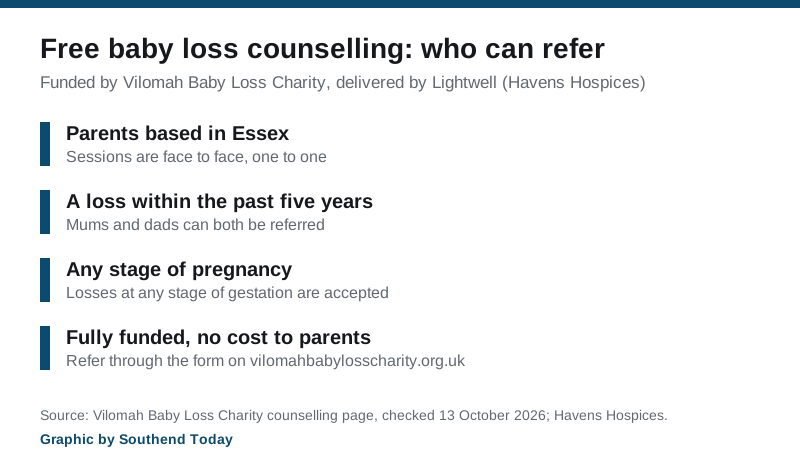
- Who can be referred: parents based in Essex, where the loss happened within the past five years, at any stage of pregnancy, according to Vilomah’s counselling page (checked 13 October 2026).
- How: the referral form on that page, or email vilomahbabylosscharity@gmail.com.
Why a hospice is offering it
Hospices are usually associated with care at the end of life, and Havens Hospices says this partnership takes its counsellors to people it would not normally see. “We’ve partnered with local Essex based charity, Vilomah Baby Loss, a charity founded by bereaved parents,” the hospice said. “Vilomah funds counselling sessions with us for parents who meet their criteria. This means we can reach families who might not usually get support from a hospice.”
“At Lightwell Counselling, part of Havens Hospices, our counsellors are specially trained to support people after baby loss,” it added. “We offer one-to-one counselling in a safe, confidential space.”
Vilomah’s own page sets out who qualifies. The service “is currently available to parents based in Essex, as it is delivered face-to-face”, it says, and the charity accepts “referrals where the loss occurred within the past five years. Support is available for losses at any stage of gestation.” Thanks to fundraising and donations, it says, the counselling is “fully funded”, “removing financial worry at a time when emotional support matters most”.
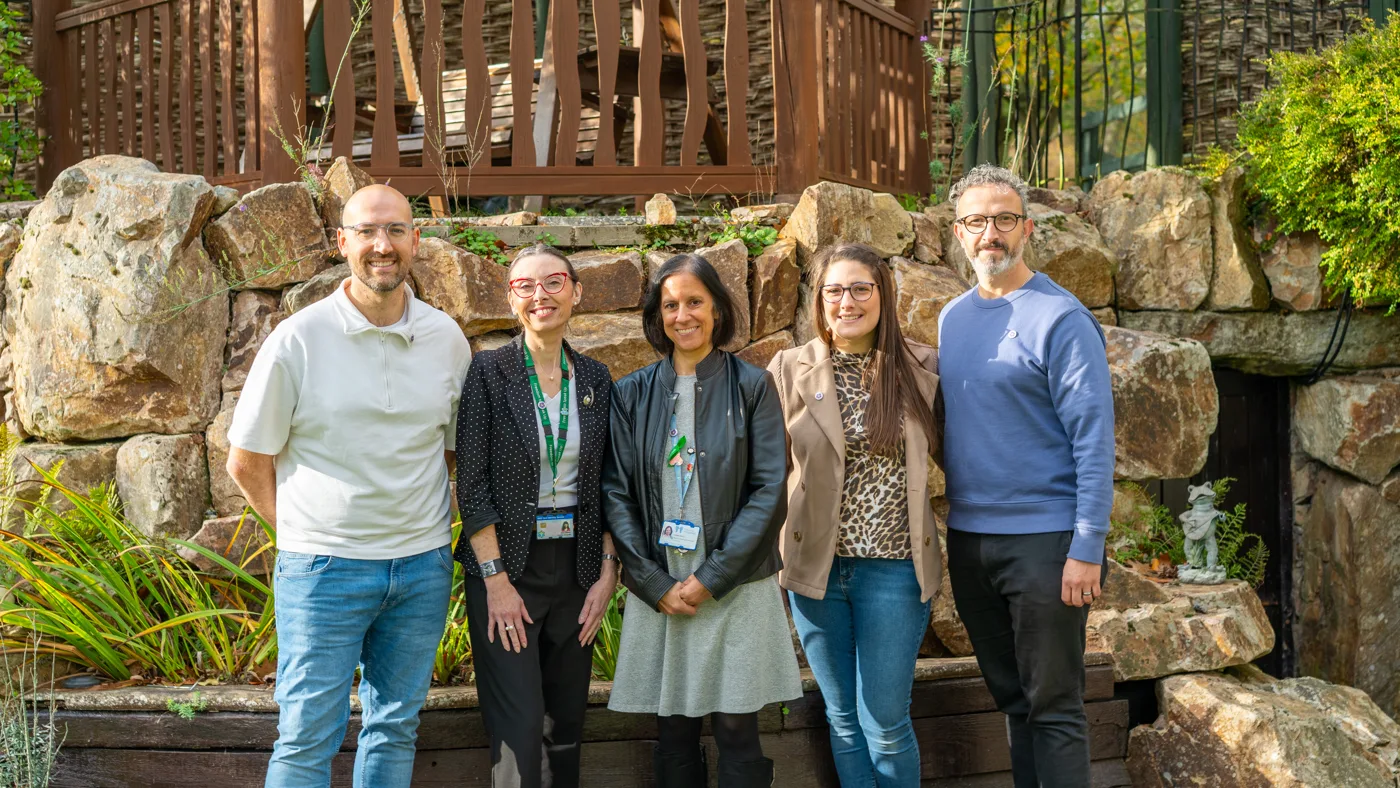
The charity grew out of football. Vilomah “began life as FC Vilomah”, according to Havens Hospices: “It started in 2019 as a grassroots football team bringing together bereaved dads.” Its trustees today describe their own losses on the charity’s about page. Charlotte Johns, one of the three trustees who met the Lightwell team at Little Havens Hospice, writes that she became a trustee “to help provide support for other bereaved parents, like myself, and to raise awareness of baby loss.”
What to say to someone whose baby has died
The advice comes from Sarah Bunce, the Adult Counselling Service Lead at Havens Hospices. She is a qualified counsellor accredited with the BACP, with more than 16 years’ experience, and leads both the hospice’s Adult Counselling Service and Lightwell.
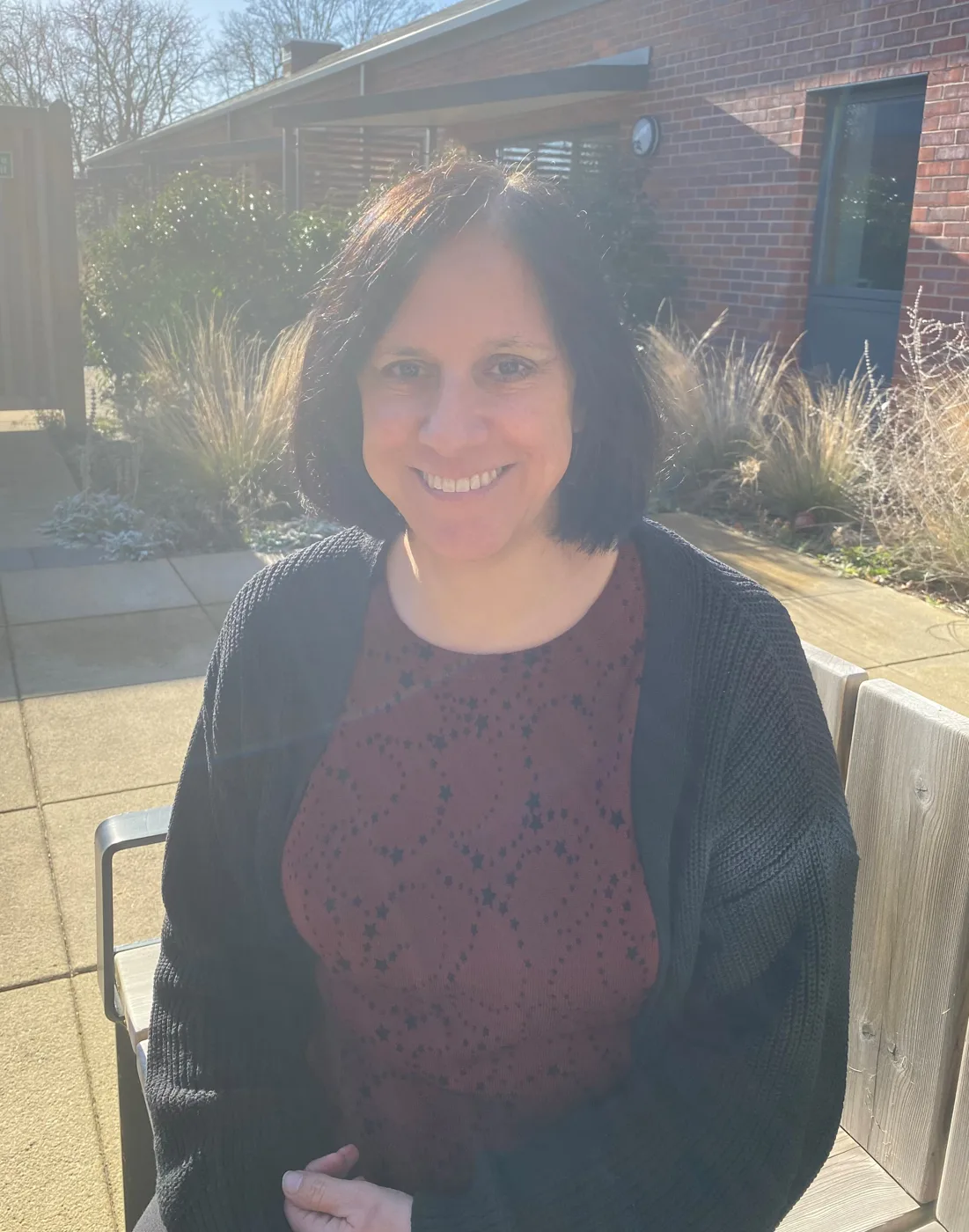
She starts from the silence. “If you know someone whose baby has died, it can be hard to know what to say. We often worry we’ll upset them, so we stay silent,” she writes. “But saying nothing can feel worse for parents who are already grieving.”
Say something. “When you see the parents, acknowledge their baby’s death. A simple ‘I’m so sorry’ can mean a lot.”
Leave out the consolations. “Try to avoid phrases like ‘at least you know you can get pregnant’ or ‘you can always try again’. People usually mean well when they say these things. But they make a parent’s grief feel smaller, and they rarely help.”
Use the baby’s name. “Some parents choose to name their baby. If they have, use that name when you talk about them. Their baby mattered to them. Saying their baby’s name shows that you care too.”
Ask, then listen. “You can ask if they’d like to talk about what happened. Then respect whatever they decide. If they want to talk, just listen. You don’t need to think of something clever to say. Nothing you say can fix this, so don’t try. Listening and understanding how they feel is enough.”
And if they do not want to talk: “Baby loss is deeply personal and often traumatic. They may not be ready right now. Let them know you’re there whenever they are.”
Offer something specific. “Practical help can make a real difference. You could cook them a meal, or help look after their other children if they have them,” she writes. “‘Let me know if you need anything’ is kind, but it isn’t always helpful. Most people won’t reach out and ask. Offering something specific makes it easier for them to say yes.”
Remember the dates. “Try to remember dates that matter, like their baby’s due date. These days can be especially hard and emotional. If you know when they are, you can check in and offer extra support when it’s needed most.”
Don’t forget the father. “When a baby dies, people often rally around mum. Dads’ feelings can be forgotten. But dads are grieving too, and they need support as well.”
Her summary is short. “Everyone feels different emotions after baby loss, depending on what’s happened. There’s no right way to feel. The best thing you can do is listen, avoid the clichés and simply be there.”
What it means for you
If you live in Southend or anywhere in Essex and your baby died in the last five years, at whatever stage of pregnancy, you can ask for counselling that costs you nothing. Parents can refer themselves: the referral form can be filled in by a parent, and there is a box for health professionals referring on a patient’s behalf. The charity says someone from its team will then be in touch to talk you through the next steps. Questions go to vilomahbabylosscharity@gmail.com.
If it is a friend, colleague or relative who has lost a baby, Sarah Bunce’s list is the practical part: say you are sorry, use the baby’s name, offer a specific thing rather than “anything”, note the due date, and ask the dad how he is doing too.
Havens Hospices runs Fair Havens and Little Havens; more about its services is at havenshospices.org.uk.
Do you have a story from your charity, school or club? Send us your news.
Have your say