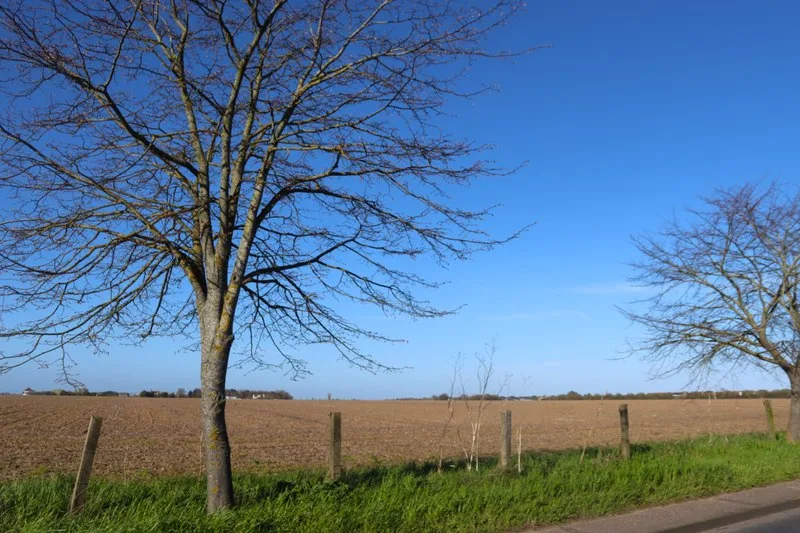

Officers recommend granting 2,000 Green Belt homes at Bournes Green Chase on 26 August, two days after full council is asked to reaffirm the Green Belt.
Southend-on-Sea City Council’s planning officers have recommended that the council grant outline permission for up to 2,000 homes on Green Belt farmland north of Bournes Green Chase. The recommendation was published on Friday in the agenda for the Planning Committee, which meets at 5pm on Wednesday 26 August in Committee Room 1 at the Civic Suite (agenda, Southend-on-Sea City Council).
It arrives two days after all 51 councillors are asked to do the opposite. At an extraordinary meeting of the full council at 6.30pm on Monday 24 August, a cross-party motion asks members to reaffirm Core Strategy Policy KP1, that “a Green Belt will be maintained around the urban area”, and to record that the council “wishes for the Green Belt around the urban area of Southend-on-Sea to remain open and undeveloped” (motion, Southend-on-Sea City Council). The motion is proposed by Cllr Alex Moyies, Reform UK’s shadow portfolio holder for planning, and seconded by Cllr James Moyies, the Conservative shadow portfolio holder for the same brief. It also asks the Mayor to publish an open letter to residents recording what the council decides.
The two meetings are separate in law. Monday’s is a policy statement by the full council. Wednesday’s is a decision on a live planning application, taken by the 11-member Planning Committee on the planning merits of that application.
What is proposed
Application 25/01792/OUTM was submitted by Thorpe Estates Ltd for a 94.8-hectare site of open agricultural land, bounded by the A13 at Bournes Green Chase to the south and Southend Road to the north. All matters are reserved except access. The officer report sets out the scheme as (committee report, Southend-on-Sea City Council):
- up to 2,000 homes, including up to 150 later living units for older residents
- 45% affordable housing, around 900 homes, split 60% affordable rent and 40% shared ownership
- a two-form entry primary school and nursery provision for up to 106 children
- up to 1,200 sq m of healthcare floorspace on a serviced site transferred at no cost
- a local centre of up to 2,200 sq m of commercial and community uses
- a new public park of at least 23.28 hectares
- new roundabouts on the A13 and at Bournes Green, and improvements at Maplin Way and Southend Road
Buildings would run from 2.5 to 4 storeys, with a maximum ridge height of 16 metres on the tallest blocks and 2.5 storeys around most of the site’s edge. The indicative mix is roughly 70% houses and 30% flats. Public open space would come to about 40.8 hectares, or 43% of the site.
Why officers say yes
The decisive figure in the report is not about the Green Belt at all. It is the council’s housing land supply.
“The Council’s latest published Five-Year Housing Land Supply (5YHLS) position confirms that it can currently demonstrate only approximately 1.6 years of deliverable housing land.”
Because Southend cannot show five years of supply, paragraph 11(d) of the National Planning Policy Framework is engaged and what planners call the tilted balance applies. Permission should then be granted unless the harm would significantly and demonstrably outweigh the benefits.
Officers do not soften the harm. They give substantial weight against the scheme for inappropriate development in the Green Belt, loss of openness and encroachment into the countryside, moderate weight against for landscape and visual impact, and limited weight against for the loss of best and most versatile agricultural land and the pressure on local services.
They also reject the applicant’s argument that this is “grey belt”, the lower category of Green Belt land introduced by the 2024 NPPF. Citing the council’s own 2024 Green Belt review, the report concludes the site “makes an important contribution to the openness of the Green Belt and its role in restricting the outward expansion of Southend-on-Sea”, and that releasing it would push development north beyond “the strong, defensible boundary of Bournes Green Chase”. On the officers’ own assessment, this is Green Belt, not grey belt.
The case for approval instead rests on the benefits: housing supply, 45% affordable housing against the 30% the local plan requires, compliance with the Green Belt “golden rules”, and the infrastructure package. Officers conclude those benefits “clearly outweigh the identified Green Belt and other harms identified”.
The money attached
The recommendation is conditional on a Section 106 agreement. The heads of terms agreed in principle with the applicant include these cash contributions:
| Contribution | Amount |
|---|---|
| Secondary education | £10,408,320 |
| Primary education | £10,023,300 |
| Healthcare construction | £1,328,000 |
| Bus rerouting and enhancement | £800,000 |
| Ambulance service | £680,000 |
| Bus stop enhancements, Wakering Road and Bournes Green Chase | £530,000 |
| Police infrastructure | £501,298 |
| Strategic active travel improvements | £450,000 |
| Thorpe Bay station active travel route | £260,000 |
| Garons Roundabout | £125,000 |
| Parsons Green Roundabout | £100,000 |
| Section 106 monitoring | £100,000 |
| Travel plan monitoring | £50,000 |
| Employment and training | £30,000 |
That comes to £25,385,918, Southend Today’s total of the cash sums listed in the report. It excludes the works to be built rather than paid for, the primary school site and healthcare site transferred at nil value, and the affordable homes themselves. Almost every payment is tied to an occupation trigger rather than to a date, so the money arrives as the estate is built out.
The report also records that the council’s independent viability consultant, Quintic Advisory LLP, found the scheme viable while carrying 45% affordable housing and infrastructure costs of roughly £60,000 per home.
315 objections, and two consultees still unhappy
The council notified 468 surrounding properties in January 2026 and ran a second round of consultation in April. By the time the committee report was published, 315 objections had been received from residents, community groups and other interested parties, up from the 200 shown on the council’s planning file when we checked it on 17 August. The report summarises objections only and records no representations in support. The objections most often raised traffic and congestion, pressure on local infrastructure and services, landscape and visual effects, ecology, flood risk, drainage, the scale of the development and the case for very special circumstances.
Comments are still being accepted. The report says any received up to the day of the meeting will be taken into account and summarised in the supplementary agenda, which officers publish on the morning of the committee.
Two statutory consultees are worth watching:
- Natural England lodged a holding objection because the scheme offers 5.15 hectares of alternative natural greenspace per 1,000 people against an agreed standard of 8 hectares, a shortfall of around 38.4 hectares. After a site visit and further talks, officers say Natural England has confirmed its concerns are satisfied, and that formal written withdrawal of the objection will be reported in the supplementary agenda. Until that is published, the withdrawal is not yet on the record.
- Sport England maintains elements of its objection, including over the loss of the TruGym at Thorpe Bay, which sits in the site’s south-western corner and which it does not consider adequately replaced.
The NHS Mid and South Essex Integrated Care Board raised no objection but warned that GP surgeries serving the area are already running with a significant capacity deficit.
Even a yes does not end it
The recommendation is not a straightforward grant. Officers ask members to delegate the decision, and the permission cannot be issued until two things happen: the Section 106 agreement is completed, and the government has been consulted.
Under the Town and Country Planning (Consultation) (England) Direction 2024, a council that is minded to approve inappropriate Green Belt development creating 1,000 sq m or more of floorspace, or having a significant impact on openness, must first consult the Secretary of State. The recommendation is conditional on no direction then being issued under section 77 of the Town and Country Planning Act 1990, which would take the application away from Southend and hand the decision to a government minister after a public inquiry. On a Green Belt scheme of this size that is a real possibility, not a formality.
The application’s agreed decision deadline is 31 August 2026.
What it means for you
- You can still comment. Representations received up to Wednesday will be reported to the committee. Use the application reference 25/01792/OUTM on the council’s planning portal, and see our guide to Southend planning applications for how the process works.
- You can watch both meetings. Monday’s extraordinary council at 6.30pm and Wednesday’s Planning Committee at 5pm are webcast live from the council’s website. The Planning Committee note warns that room capacity is limited, so a seat is not guaranteed if you turn up.
- Read the supplementary agenda on Wednesday morning. It is where late objections, Natural England’s formal position and any officer change of mind will appear, and it is published only hours before members vote.
- A yes on Wednesday is not a spade in the ground. Only access is settled at this stage. Layout, appearance, scale and landscaping all return as reserved matters, with the first application due within three years and the last within fifteen.
- If it is approved, the money follows occupations, not the calendar. The primary school site transfers before the 750th home, the new A13 roundabout before the 400th, and the healthcare site before the 572nd.
We will report the outcome of both meetings.
Sources
- Planning Committee agenda, 26 August 2026, Southend-on-Sea City Council
- Committee report on 25/01792/OUTM, Land North of Bournes Green Chase
- Extraordinary council agenda, 24 August 2026
- Notice of Motion: Reaffirmation of the Adopted Development Plan
- The Town and Country Planning (Consultation) (England) Direction 2024, MHCLG
- Town and Country Planning Act 1990, section 77
Have your say