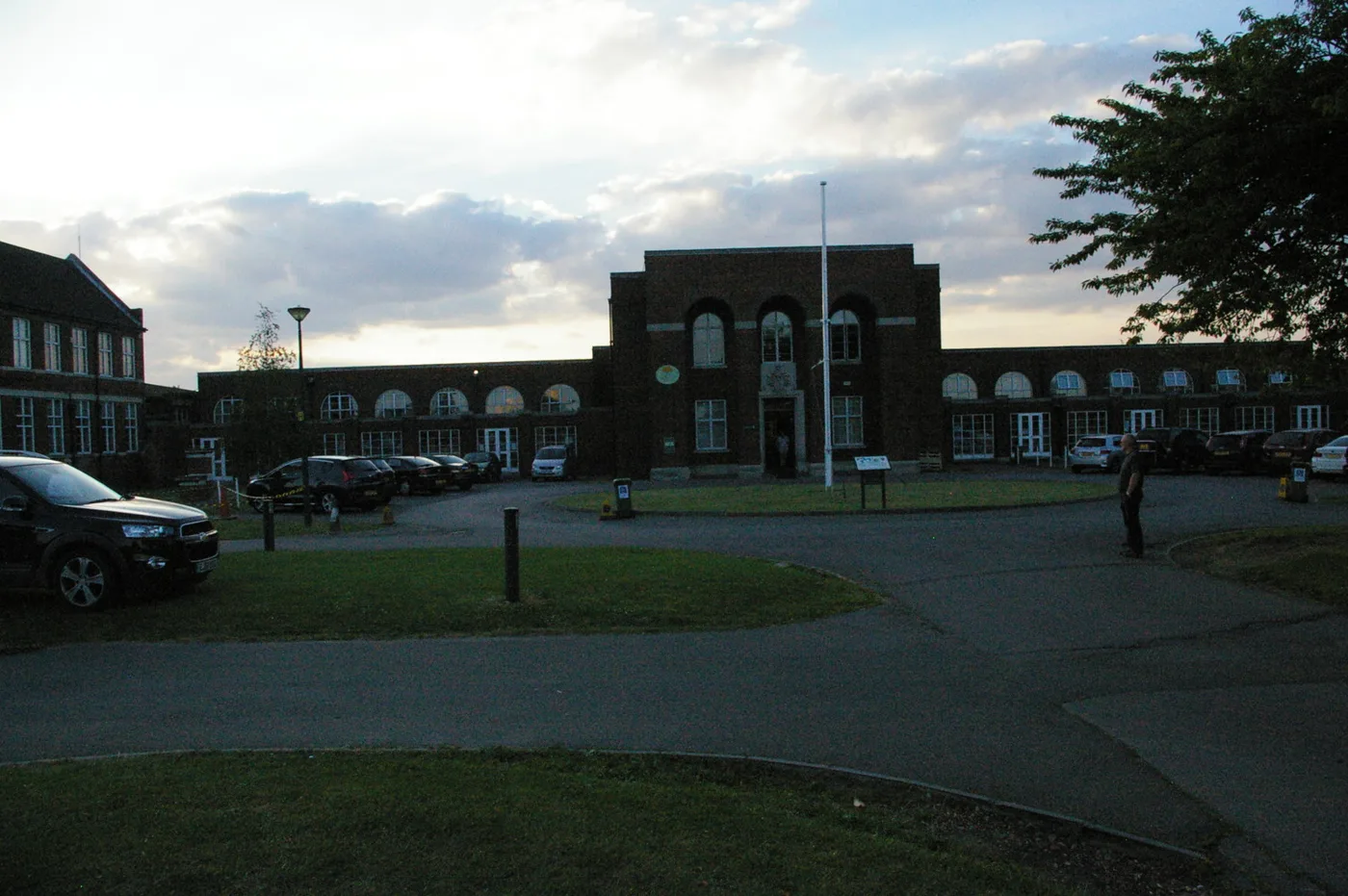

Six grammar school offers for this September were withdrawn after the council found the families did not live locally. Most were at WHSB and SHSB.
Six grammar school places for this school year were taken back after the council found the children did not live where their applications said. Southend-on-Sea City Council’s Counter Fraud and Investigation Team carried out the checks. The council announced the result on Tuesday 13 October (Southend-on-Sea City Council).
The families had claimed to live in Southend-on-Sea. The places were for Year 7 in the 2026/27 school year, which started in September. The council says the withdrawn offers freed those places for children who do live in the local area.
Which schools
The council has not given a figure for each school. It says the cases were mostly at the boys’ grammars:
- Westcliff High School for Boys and Southend High School for Boys, split “broadly” between the two
- one girls’ grammar school, which the council has not named
Cllr Chris Webster, the cabinet member for learning, said: “These investigations help ensure places are available to children who are resident in the local area and that the admissions process always remains fair.”
The full findings are in a report to the council’s Audit and Governance Committee on Monday 19 October, item 11 (meeting papers).
What the committee report adds
Updated 19 October: we have now read the report. It does not split the six cases by school either. It says:
- the six offers were withdrawn “due to non-residence in the city following CFIT investigations”
- the fraud team opened 20 schools cases (including early years) between 1 April and 16 September, and closed 25; none was still active (Appendix 2)
- none of the five prosecutions the team lists is a school admissions case (covering report)
The council puts a value on each place. It counts a wrongly taken grammar place as £42,000, based on £6,000 a year for secondary education and the 85% of grammar pupils who stay on into the sixth form (Appendix 3). At that rate the six places come to £252,000. The report records a “notional saving” of £504,000 for all schools work since April. That is a council estimate of the cost avoided, not money recovered.
Why a Southend address matters so much
Passing the eleven-plus does not guarantee a place. When a grammar school has more qualifying boys than places, where they live decides it.
Both boys’ grammars give priority to children whose home is in the SS0 to SS9 postcode areas. Children from outside those postcodes come last, after looked-after children and local children (Secondary Schools Admissions Booklet 2026-27).
The SS0 to SS9 area is wider than the city. It takes in places like Rayleigh, Rochford and Hockley in Essex County Council’s area. The council’s statement talks about families claiming to be Southend residents. It does not say exactly where they actually lived.
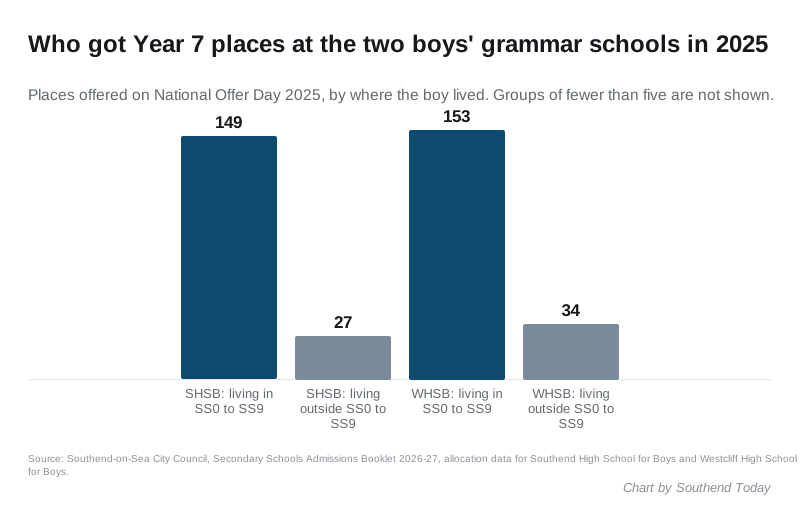
The schools are heavily oversubscribed. For September 2025, according to the council’s booklet:
| Southend High School for Boys | Westcliff High School for Boys | |
|---|---|---|
| Places (admission number) | 180 | 185 |
| Preferences received | 1,077 | 1,035 |
| Places offered to boys living in SS0 to SS9 | 149 | 153 |
| Places offered to boys living outside SS0 to SS9 | 27 | 34 |
The “in SS0 to SS9” figures add together the booklet’s two priority-area rows. Groups of fewer than five, such as children with an education, health and care plan, are not shown. At both schools in 2025, the last place offered went to a boy from outside the priority area.
So every false local address pushes a genuinely local child down the list, or out of a place altogether.
What the rules say about false addresses
The admissions booklet spells out what happens. The council can ask any family for proof of address, such as:
- a council tax bill
- a tenancy agreement through an agent, for at least 12 months
- two recent utility bills
- a doctor and dentist registration in the child’s name
It can also check with other council departments, contact other councils and, in some cases, make unannounced home visits. A relative’s address, or a childminder’s, does not count.
If a place was won with false or misleading information, the council says it will withdraw the place, even after the child has started. The family can make a fresh application. The booklet also warns that knowingly giving a false address “could be a criminal offence” and parents “could be liable to prosecution for fraud offences”. The council’s statement does not say whether any of the six cases will go that far.
What it means for you
- If you are applying for September 2027, the address on the form must be where your child normally lives during the school week. Moving later, or using a second home, can count as misleading.
- If you move between September and July, you must tell the admissions team. Not doing so counts as misleading information.
- If your child is on a grammar waiting list, places freed by withdrawals go to the next child on the ranked list. Ask the school or the council’s admissions team where your child stands.
- The 2027 rules are in the council’s secondary admissions booklet for 2027-28. Our Southend school term dates page has the year ahead.
Sources
- Southend-on-Sea City Council, Council investigations help secure grammar school places for local area children, 13 October 2026
- Audit and Governance Committee, 19 October 2026, meeting papers, item 11: Counter Fraud and Investigation Team quarterly report and appendices 2 and 3
- Southend-on-Sea City Council, Secondary Schools Admissions Booklet 2026-27
Have your say