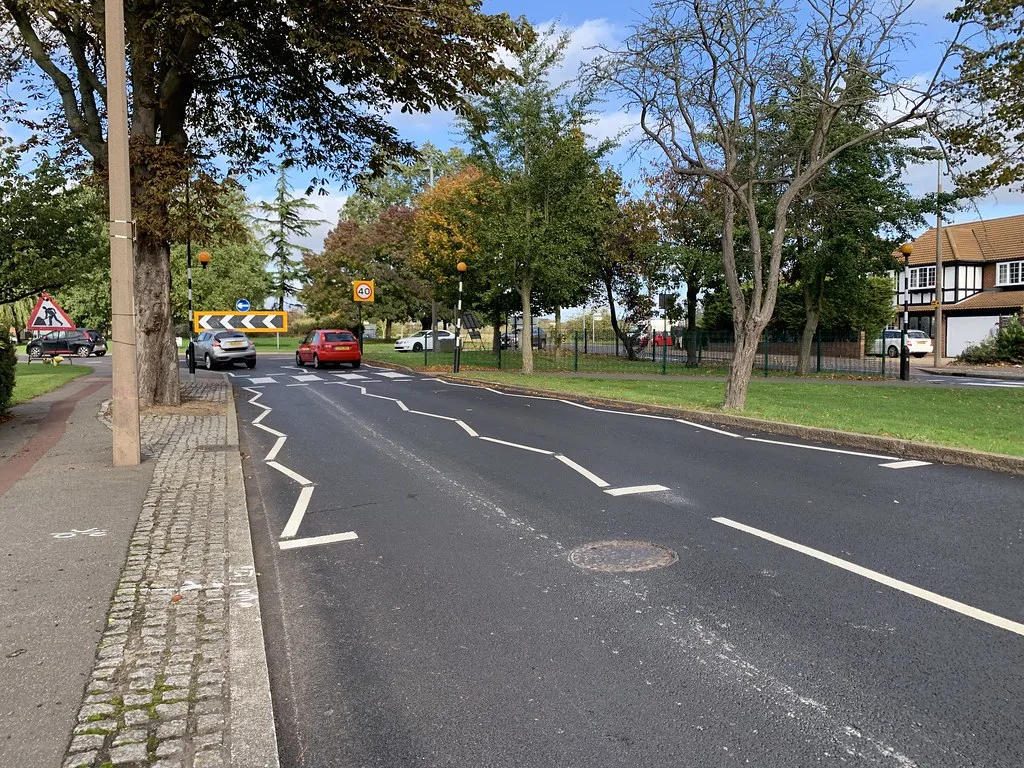

The tank meant to stop sewage surging up through manholes on Thorpe Hall Avenue should arrive by the end of October. Digging up to 4m deep now runs into winter.
The storage tank meant to stop sewage and storm water surging up through manholes on Thorpe Hall Avenue is now on order and expected by the end of October. Work to install it should start in early November, which means digging up to four metres deep through the winter.
That is the council’s update to the Place Overview and Scrutiny Committee, which meets on Thursday 15 October (Thorpe Hall Avenue Scheme and A-WINEP report). The report is signed off by Alan Richards, the council’s Executive Director for Environment and Place, with Cllr Daniel Cowan, the council leader, as the Cabinet member.
What floods, and why
Thorpe Hall Avenue runs down to the seafront at Thorpe Bay. The report says the road and nearby homes have flooded more often in the last few years with “final effluent and storm sewage” escaping through manholes from Anglian Water’s long sea outfall.
It happens during what the report calls tide locking. A high tide coincides with heavy storm flows, the outfall cannot discharge into the estuary, and the flows back up through the sewer network until they find a manhole.
Thorpe Hall Close, the lowest-lying part of the area, was hit regularly.
What has been done
- An “entry treatment” at Thorpe Hall Close is finished. It channels surcharging water towards the highway gullies in Thorpe Hall Avenue and away from the homes in the Close. The council says it has had positive results.
- All 11 new gullies on Thorpe Hall Avenue, and the pipework under the road, are complete and ready to connect to the tank.
- Trees and stumps have been removed from the site of the tank.
- Gullies are being emptied regularly and the road is being swept more often so that fallen leaves do not block them.
What is left, and why it slipped
The tank itself has not been installed. The report says the hold-up was a cable fault found while UK Power Networks diverted a low-voltage main to make room for the tank. UKPN has traced the fault, but the tank work can only go ahead once that diversion is signed off as complete. The council held the tank order until UKPN confirmed the diversion was progressing.
Anglian Water has agreed extra money so that the tank can be built to the largest capacity the site allows. Its initial contribution to the scheme was £350,000.
The report is candid about the risk of a winter build:
“Winter conditions, including increased rainfall, groundwater levels, reduced daylight hours and poorer ground conditions, could make excavation and construction activities more challenging and increase the risk of delays.”
It also says the scheme will not stop the long sea outfall releasing. It is designed to manage the flows better and reduce the risk to properties when the network surcharges.
The bigger programme: £10m of schemes in outline design
The same report describes a wider partnership between the council and Anglian Water, under what the water company calls its Advanced Water Industry National Environment Programme, or A-WINEP. Anglian Water chose Southend because of the existing Catchment to Coast work and the Water Summit.
The figures in the report:
- Anglian Water has an initial budget of around £100 million to cut combined sewer overflow spills by 2035
- around £10 million of nature-based drainage schemes on council land are moving to outline design
- a nine-year programme is being drawn up
- some schemes will still be underground storage tanks or pumping station controls, because nature-based drainage alone will not hit the spill targets
Anglian Water funds a partnership lead who sits inside the council. The report says the programme “will not place additional burdens on the Council’s capital programme”. Where the council already plans road or footway work that would help cut spills, Anglian Water pays for the extra.
There has been no formal council consultation on the programme yet. The report says locations will be discussed with ward councillors and residents as schemes come forward, and that larger schemes off the public highway will need planning permission.
What it means for you
If you live on or near Thorpe Hall Avenue, expect the tank excavation to start in early November and to run through the winter. The council has not published a finish date, a traffic management plan or a road closure order for the work. Our Southend roadworks page carries every order the council publishes, and Thorpe Bay already has Cadent’s gas closures on Riviera Drive and three nearby junctions from Monday 12 October to 9 November.
Thorpe Hall Avenue is also on the council’s resurfacing list for 2026 to 2029, northbound from outside number 265 to Willingale Way. We listed all 121 roads in September.
The scrutiny meeting is at 6.30pm on Thursday 15 October in Committee Room 1 at the Civic Centre, Victoria Avenue, and is webcast. The update is verbal, so there is no recommendation for councillors to vote on.
Have your say