
Officers want Three Shells Lagoon taken out and the beach restored, at about £800,000. Cabinet decides on 16 November, and work could start in spring 2027.
Three Shells Lagoon should be taken out completely and the beach returned to how it was, council officers have recommended. The work would cost about £800,000. The lagoon cost about £1.95 million to build and opened ten years ago.
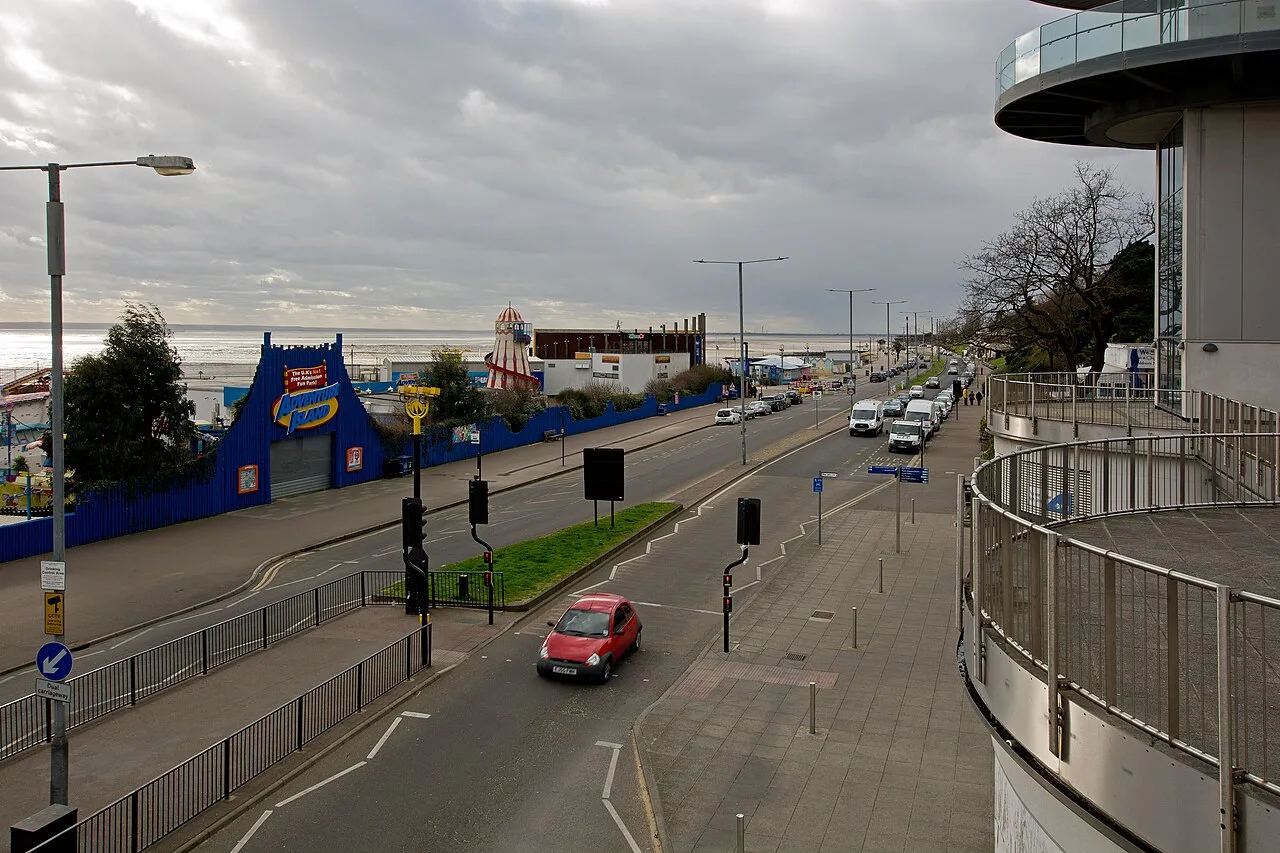
Cabinet is asked to approve the removal on Monday 16 November (report to Cabinet). The lagoon, on Western Esplanade just west of the pier, has been fenced off since a safety incident earlier this year.
If Cabinet agrees, and planning permission and marine licences follow, the report says work could begin in early to mid-spring 2027. It would take 8 to 10 weeks.
Why officers say it has to go
The lagoon opened on 22 July 2016. It was meant to give visitors water to swim and paddle in at any state of the tide. The report says it was jointly funded by:
- the Coastal Communities Fund, £1.25 million
- Southend Council, £600,000
- Stockvale Group, £100,000
Officers say the trouble began with changes to marine licensing in 2019. Seaweed and algae could no longer be cleared routinely. The lagoon does not get enough tidal flow to flush itself, so the matter rotted and gave off a “rotten-egg” smell. A deep layer of silt built up, complaints rose and use fell away.
The report admits some uncertainty here. It says the silt “may have accumulated progressively over time and/or been deposited as a result of a significant storm event”.
In 2025 and 2026 the council laid a “sand carpet” over the silt, using sand from the Gas Works area. The report says this capped most of the smell. Then, in 2026, “following a safety incident, and continued safety checks of the site”, the area was closed. The report does not describe the incident. Attempts to drain it further failed, and the sand has not compacted enough for the area to reopen. The sand work has cost about £90,000 so far.
Water tests in October 2024 found trace bacteria, likely from gull droppings, and no rare or protected species. The report notes that bathing water at Three Shells is rated excellent.
The three options
Engineers from Haydn Evans and Marlborough Highways looked at three ways forward with the council.
| Option | What it involves | Estimated cost |
|---|---|---|
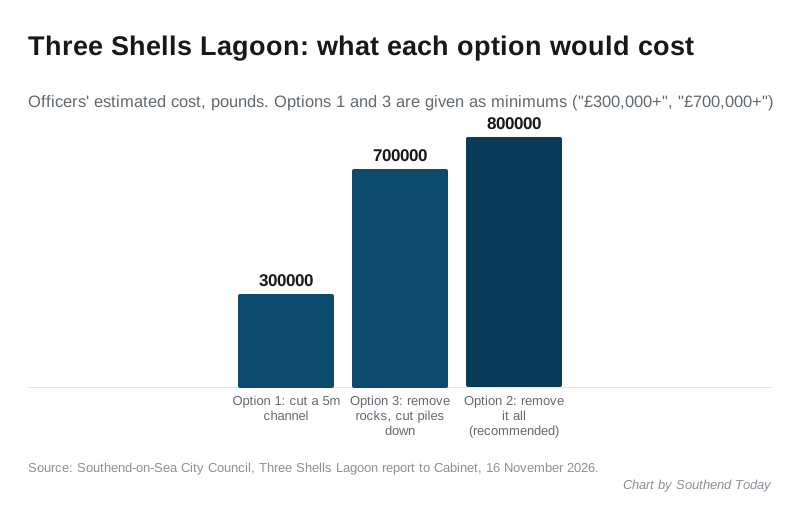
| 1: sluice removal | Cut a channel about 5m wide so the tide flows in and out; remove the sluice; part-remove the steel walls | £300,000+, with higher yearly maintenance |
| 2: complete removal (recommended) | Take out the rock armour, the steel sheet pile walls, the sluice and the railings, then refill and regrade the beach | about £800,000, with no maintenance after |
| 3: partial removal | Remove the rocks and cut the steel walls down below the clay, then cap them in concrete | £700,000+ |
Officers rejected option 1 because the trapped silt cannot be treated as ordinary waste. Very few sites in the country can take it, so disposal would be “extremely high” in cost. The rocks left behind would no longer hold water at low tide, would look like “two large piles of rocks on the beach” and would invite climbing.
They rejected option 3 because the buried steel and concrete could be exposed over time. The report says the extra cost of removing everything is “relatively small”.
A point the report makes about the lagoon’s build: it is not just a ring of rocks. It is a line of steel sheet piles welded together to hold water, with the rocks laid against them.
What would happen to the rocks and the silt
The rock armour would go to East Beach, for a sand dune restoration scheme planned there in 2027/2028. The report says rock for that scheme “often has to be imported from Norway”, so reuse cuts cost and carbon.
The silt would be left under the sand carpet to disperse slowly with the tide. Officers say this avoids a sudden plume of silt reaching the saltmarsh and seagrass, which matter to wintering birds. Beach firmness after removal would be monitored.
The money and the conditions
Cabinet is asked to allocate the £800,000 from the Structures budget in the council’s capital programme. That money is “held subject to viable business case”, which the council’s Investment Board must still agree. The works would go through the council’s existing Infrastructure Term Service Contract.
The removal needs planning permission and marine licences. Natural England, the Environment Agency and Historic England would be consulted. The foreshore is protected under several designations, including the Benfleet and Southend Marshes SSSI. Work has to fit seasonal limits set to protect wintering wildlife.
The report says officers have held “initial conversations” with the Marine Management Organisation and Natural England. Stockvale would be consulted on the works programme if Cabinet agrees.
What it means for you
- The lagoon stays fenced off until the work is done. Keep out of the closed area.
- Three Shells beach itself is open. The report points to the seafront’s paddling pools, which hold water at low tide, for water play.
- The decision is on Monday 16 November at 6pm in the Civic Centre, and the meeting is webcast.
- You can comment later. Planning and marine licence applications carry their own public consultation.
We first reported the removal option in October: Three Shells Lagoon could be removed. The same Cabinet meeting also takes the public toilet review, which moves the summer attendant at Three Shells to weekends and holidays.
Sources
- Southend-on-Sea City Council, Three Shells Lagoon, report to Cabinet, 16 November 2026, with appendices 2 to 4 (option drawings)
- Southend-on-Sea City Council, Cabinet agenda, 16 November 2026
Have your say