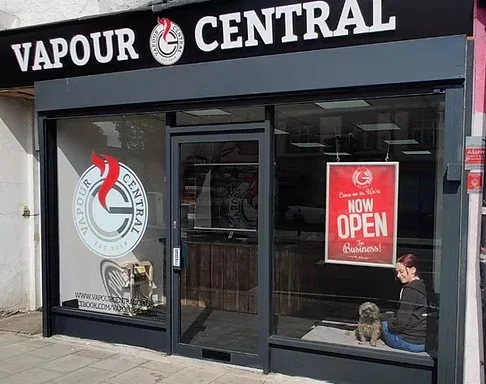

Vape shops lose business rates relief from April 2027. Vapour Central, with shops in Westcliff, Leigh and Rayleigh, has asked the Treasury for its evidence.
The owner of three vape shops in Westcliff, Leigh and Rayleigh is challenging the Government’s decision to take business rates relief away from specialist vape shops in England from April 2027. Sam Bignell, managing director of Vapour Central Ltd, wrote to HM Treasury on 30 October and says the reply he received on 10 November did not answer his questions. He is now making a Freedom of Information request for the evidence behind the policy.
Overview
- What changes: from April 2027, vape shops in England can no longer claim Small Business Rates Relief or the lower retail, hospitality and leisure (RHL) business rates multipliers (Budget 2026).
- Who is not caught: according to Mr Bignell, the Treasury told him that general retailers selling vapes among a much wider range of goods are not intended to be covered.
- What he wants: the research and impact assessments the decision was based on, including any work on closures, job losses and stop-smoking services.
What the Government has decided
The measure was announced in Budget 2026, published on 28 October. The Budget says vape shops and adult gaming centres in England will lose eligibility for the RHL multipliers from April 2027, and vape shops will also lose Small Business Rates Relief, “so that these reliefs are better targeted at businesses that support thriving high streets”.
The Government’s Hope on the High Street plan, published on 2 November, puts it more bluntly. It says ministers will “remove business rates reliefs for businesses that do not make a positive contribution to communities, so that these businesses do not receive preferential treatment through the business rates system” (Hope on the High Street). The same document says new vape shops will need planning permission, subject to consultation, and that a licensing scheme for tobacco, vape and nicotine retailers is planned.
Mr Bignell says the details of how a vape shop will be defined, and how the change will work, are still to be published.
“I find that insulting”
Vapour Central opened in 2014. In an open letter sent to Southend Today, Mr Bignell writes:
“I’ve spent the last 12 years building Vapour Central. What started in 2014 has grown into three shops across Westcliff, Leigh and Rayleigh. We’ve created local jobs, paid our taxes, invested in our premises and helped people give up smoking.”
“Apparently, businesses like ours aren’t contributing enough to our communities. I find that insulting, and I’ve written to HM Treasury to challenge it.”
He does not defend every shop in the trade:
“I don’t doubt that some towns have too many vape shops. I also won’t defend businesses selling illegal products, supplying children or ignoring the rules. Those businesses should face proper enforcement. But why should legitimate, established retailers be penalised alongside them?”
He says the business has taken part in locally commissioned stop-smoking services since 2018, “first working directly with Southend-on-Sea City Council and later through Everyone Health”, that staff have had specialist training, and that the shops still give free stop-smoking advice. He adds that they offer parcel collection, sell drinks and other goods, and collect “substantial quantities of used vaping devices for recycling”.
“These might not sound like extraordinary achievements, but they’re the everyday things that local businesses do. We employ people, serve customers, occupy commercial premises and provide services that people use. How exactly does that make us bad for the high street?”
What the Treasury told him
Mr Bignell says the Treasury’s reply referred to concerns about the growing number of vape shops and their effect on the character of high streets, and said the decision was not a judgement on any individual shop’s conduct.
“A business could operate responsibly, employ local people, pay its taxes, provide smoking cessation support and contribute to its community, yet still lose relief simply because it’s classified as a vape shop. That doesn’t sit right with me.”
The reply also said, according to Mr Bignell, that general retailers selling vaping products as part of a much wider range were not intended to be captured.
“So a supermarket or convenience store selling exactly the same products may continue to qualify for relief, while a specialist retailer providing trained advice and smoking cessation support could lose it. Where is the logic in that?”
He describes the reply as “a standard response repeating the Government’s position” and says he has written back asking for proper answers.
Costs on top of the new vape duty
The rates change follows Vaping Products Duty, which started on 1 October 2026 at £2.20 per 10ml of vaping liquid. HMRC said the duty is meant “to reduce the affordability and appeal of vaping, especially to young people and non-smokers”, and that from 1 April 2027 every vaping product sold in the UK must carry a valid duty stamp (HMRC, 1 October 2026).
Mr Bignell lists rising staff costs, rents and energy bills alongside the duty, and asks whether anyone has assessed the combined effect:
“Could they lead to shops closing, people losing their jobs or more empty premises appearing on our high streets? Could higher prices and reduced access to legitimate retailers encourage some consumers to turn to illicit sellers? And what happens to smoking cessation services if specialist retailers can no longer afford to participate?”
The Freedom of Information request
His request asks for any research the Government used on the effect of vape shops on high streets, and any assessment of possible closures, job losses or effects on stop-smoking services.
“If the Treasury has evidence that supports its decision, then let’s see it. If those assessments weren’t carried out, I think businesses affected by the policy deserve to know that too.”
He says he is not asking for special treatment:
“I have no problem with businesses paying their fair share of tax. I also support sensible regulation and proper enforcement, especially when it comes to protecting children. Vaping isn’t risk-free, and it shouldn’t be marketed to children or people who don’t smoke.”
“Vapour Central has been part of the local high street since 2014. We employ local people, pay our taxes, help people stop smoking and provide services our communities use. I think that counts as a positive contribution. And if the Government disagrees, I’d genuinely like to understand why. Until I get a proper answer, I’ll keep asking.”
The local picture
The national change comes as Southend councillors look at the number of vape shops locally. A motion to limit new vape shops, barbers and phone repair shops, and to refuse them leases in council-owned units, was passed to the Cabinet in October (our report). Since 29 October it has been illegal to sell any vape to under-18s, and residents can report underage or illegal sales to the council online (how to report).
What it means for you
Nothing changes for shop owners until April 2027. A specialist vape shop that now pays reduced business rates through Small Business Rates Relief or the lower RHL multiplier should expect a larger bill from then, once the Government publishes how a vape shop will be defined. Shops that sell vapes as a small part of a wider range are not the target, according to the Treasury’s reply to Mr Bignell.
For customers, every vaping product sold in the UK must carry a duty stamp from 1 April 2027. Mr Bignell says his shops continue to give free stop-smoking advice.
Mr Bignell says he will share further updates as his correspondence with the Treasury goes on.
Have your say