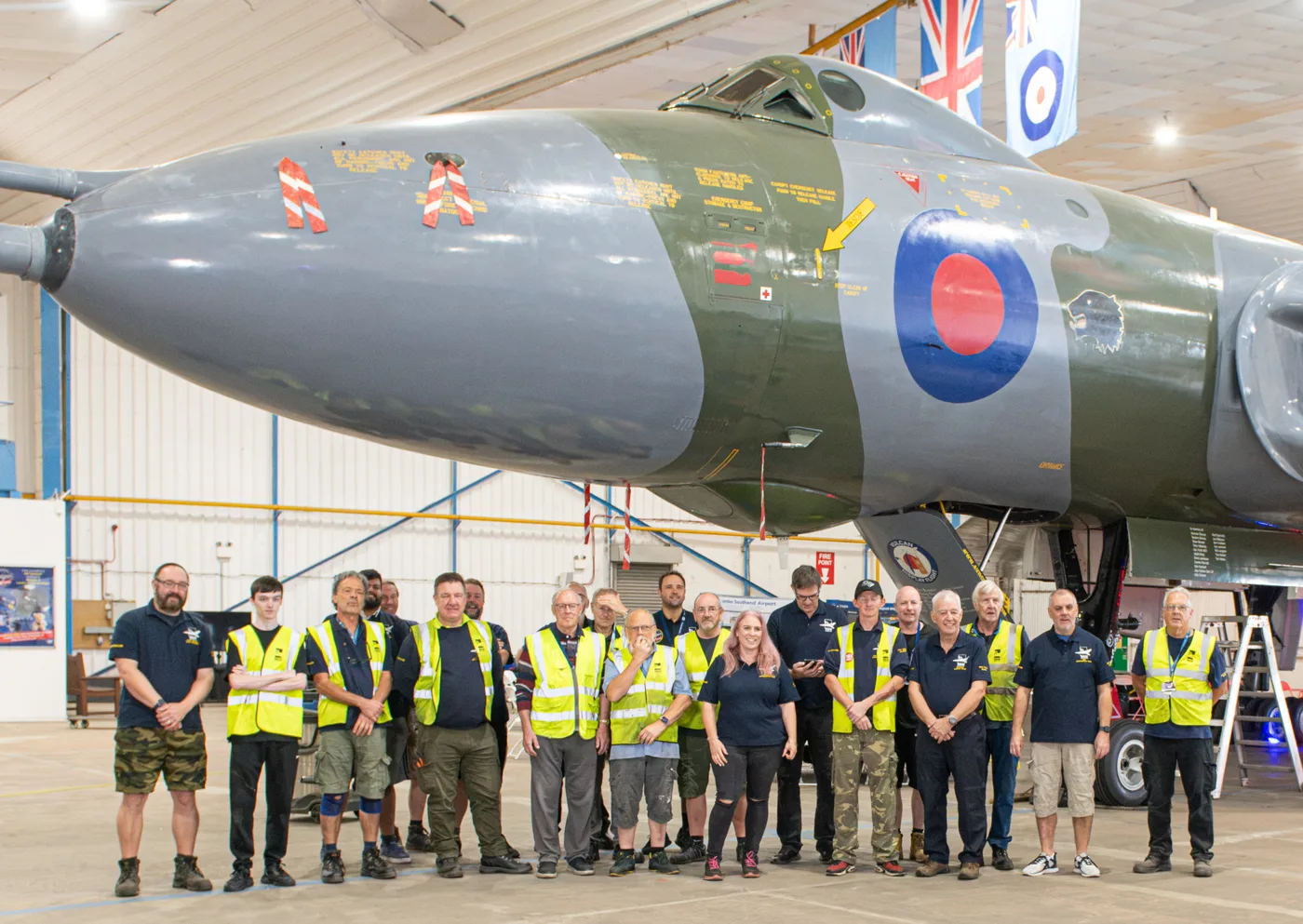

The Vulcan Restoration Trust needs £20,000 to replace 64 fuel hoses on XL426's four Olympus engines. Fuel the Howl opens today: what it buys and how to help.
The volunteers who keep Southend’s Vulcan bomber XL426 running are asking the public for £20,000 to replace 64 high-pressure fuel hoses on its four Rolls-Royce Olympus engines. The appeal, called Fuel the Howl, opens today, 12 October, on the Vulcan Restoration Trust’s fundraising page.
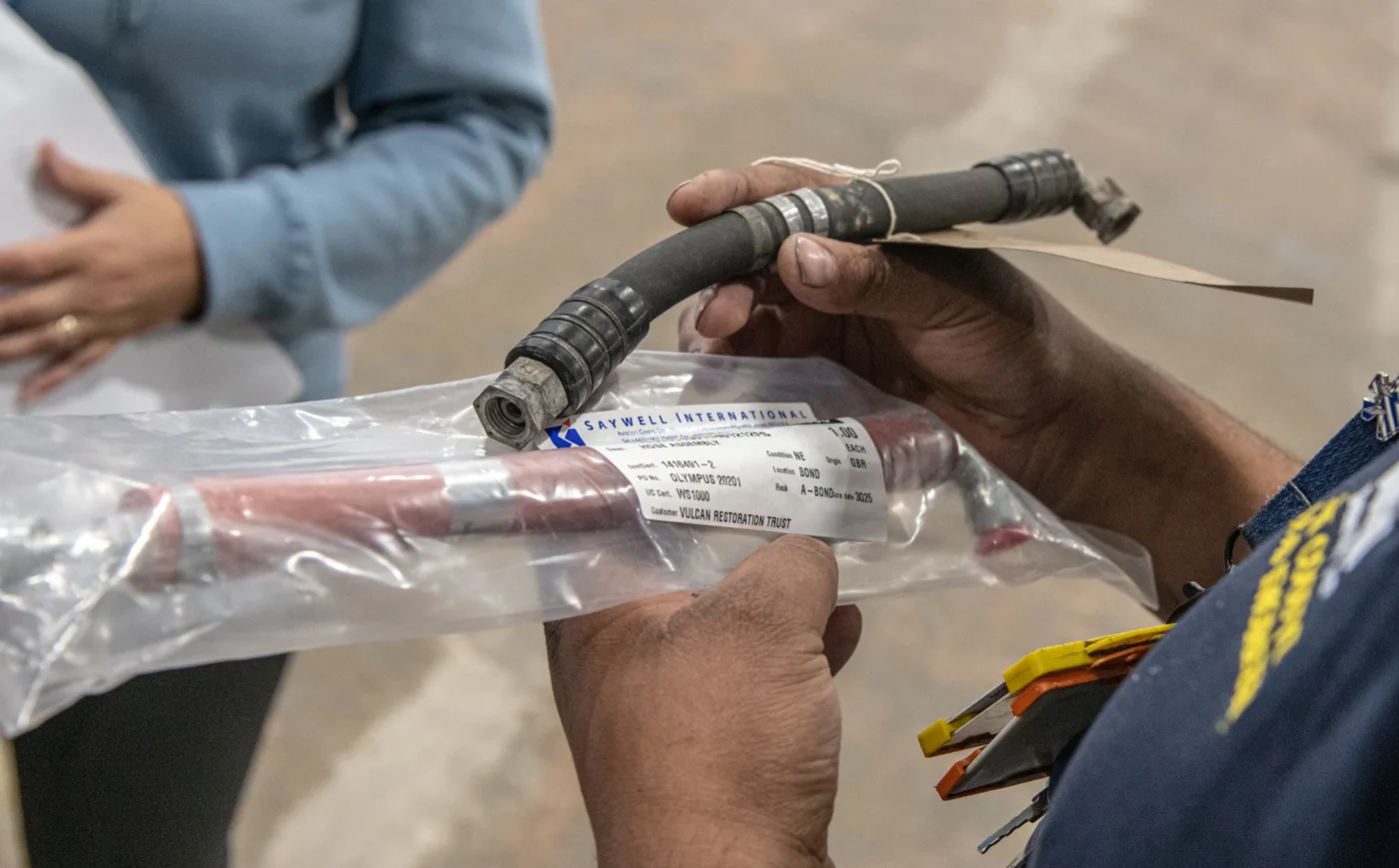
Each of the four engines has 16 of the hoses. The trust says they are approaching the end of their service life and are being replaced as part of XL426’s planned preventative maintenance, before anything fails rather than after, so that the aircraft can keep running safely for years to come.
XL426 is kept at London Southend Airport by the trust, a registered charity (number 1058111) run by volunteers. It is maintained in live ground-running and taxiable condition, which is why the engines matter: when the trust stages a high speed taxi at Southend, the sound of those four Olympus engines is, in the appeal’s words, “often the moment they have been waiting for”.
Watch: the chief engineer explains the hoses
On 8 November the trust released a video in which Matt Lawrence, its chief engineer, takes supporters behind the scenes of the project: what the high-pressure fuel hoses do, why they need renewing now, and why preventative maintenance matters on an aircraft of XL426’s age and complexity.
“Keeping XL426 operational involves looking after thousands of components that most visitors will never see. The high-pressure fuel hoses are one example of that,” he said.
“There are 16 associated with each of our four Olympus engines, and they are now approaching the end of their service life. Replacing them at the right time is an important part of our planned preventative maintenance programme.
“Fuel the Howl gives people the opportunity to support a very specific piece of engineering work and, just as importantly, gives us the chance to show people more of what goes into caring for an aircraft like XL426.”
The trust says the video is part of its promise to show supporters work that would normally happen out of public view, and that more engineering updates and introductions to the volunteers who maintain XL426 will follow.
“Behind the panels are thousands of components”
When the appeal opened on 12 October, Matt Lawrence said:
“Keeping an aircraft like XL426 operational is about much more than looking after the parts people can see. Behind the panels are thousands of components, all playing their part, and preventative maintenance is essential to protecting the aircraft for the future.
“Fuel the Howl gives our supporters the opportunity to help us fund one very specific piece of engineering work. We want people to understand exactly what we are raising money for and to be able to follow the project from the fundraising stage through to the engineering work itself.
“Our target is £20,000. Whether somebody is able to give £5, £10, £50 or simply share the campaign with others, every bit of support will help us move closer to that goal.”
A first for the trust
The trust says it has not usually run public appeals for single engineering jobs. Fuel the Howl is meant to be different: one named piece of work, a fixed target, a set period, and regular updates so donors can see where the money goes.
During the campaign it plans to take supporters behind the scenes, explain what the high-pressure fuel hoses do, and introduce some of the volunteers who maintain the aircraft. Once the engineering starts, it says it will show how the donations are being turned into work on XL426, and what was achieved once the job is finished.
“Good engineering isn’t about waiting for something to fail. It’s about making sure it doesn’t,” the appeal page says.
What happens to the money
The trust has set out what happens in each outcome:
- If the appeal raises more than the work needs, or the project cannot go ahead as planned, the rest goes to the general preservation, maintenance and operation of XL426.
- If it falls short of £20,000, the money raised still goes towards the hose replacement where that remains possible.
- If the work cannot go ahead at all, the money supports XL426’s wider upkeep instead.
The target covers the hoses “and associated components” across all four engines. When we checked the appeal page on the morning of 12 October, it showed the campaign at 1% funded.
What it means for you
- To give: donate on the Fuel the Howl page. The page suggests £10, £25, £50 or £100, or any amount you choose.
- If you cannot give: the trust asks people to share the campaign with anyone who cares about the Vulcan or British aviation heritage.
- To follow the work: progress updates will go on the trust’s website and social media channels.
The appeal comes in an anniversary year. XL426 arrived at Southend in December 1986, so this December marks 40 years at the airport. Visitors last saw inside the hangar at the final Visit the Vulcan day of 2026 on 27 September (what was on that weekend).
Sources
- Vulcan Restoration Trust, Fuel the Howl press release, sent to Southend Today, 11 October 2026
- Vulcan Restoration Trust, chief engineer video press release and video, sent to Southend Today, 8 November 2026
- Vulcan Restoration Trust, Fuel the Howl appeal page, checked 12 October 2026
- Vulcan Restoration Trust
Have your say